Something strange is happening in search. Businesses are investing more in SEO than ever before—and getting fewer website visits to show for it. If your traffic reports have been looking a little flat lately, you’re not imagining things.
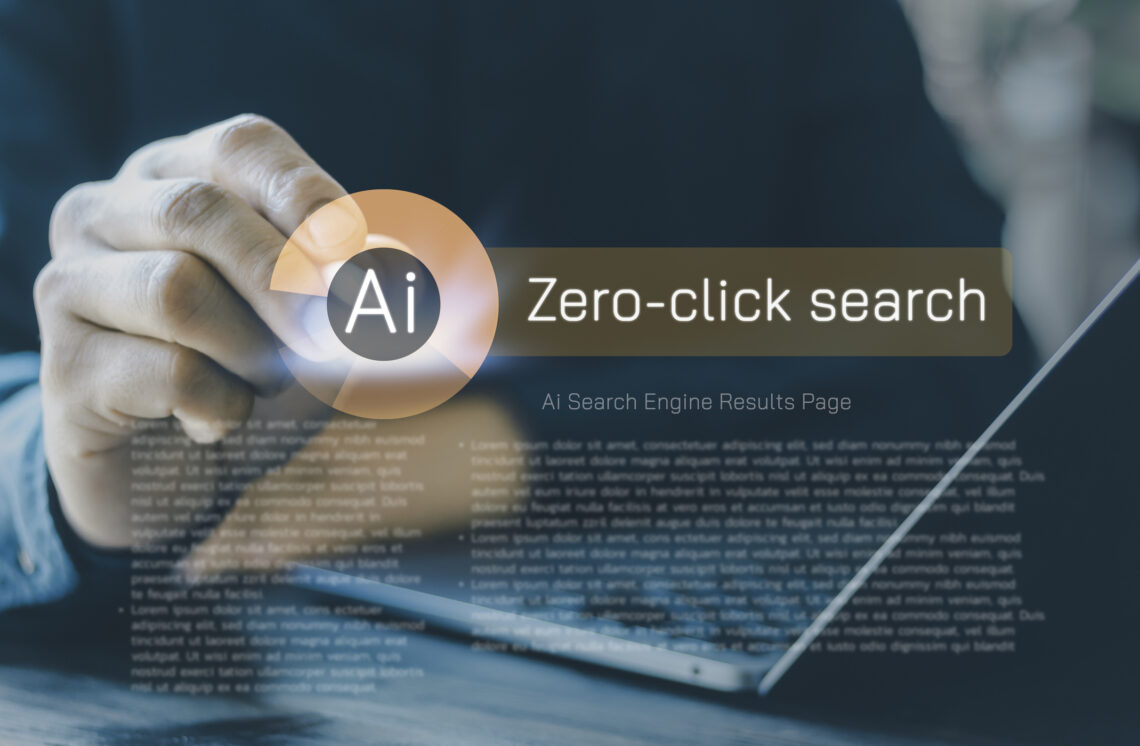
We’re now firmly in the zero-click era. A growing share of Google searches end without a single click, because AI-powered features like Google’s Search Generative Experience (SGE), Gemini, and voice assistants like Alexa answer the user’s question right there on the results page. No click required.
Most agencies will tell you this is a crisis. We see it differently. At McCord Web Services, we believe the zero-click era is one of the biggest brand authority opportunities we’ve seen in years—if you know how to play it right.
What is the zero-click era, exactly?
A zero-click search happens when someone types a question into Google (or asks their voice assistant), gets an immediate answer, and moves on—without ever visiting a website. Think: “What’s the capital of France?” or “How long does it take to form a habit?”
For years, these were mostly simple factual queries. But AI has dramatically expanded the scope of zero-click answers. Detailed product comparisons, service explanations, how-to instructions—AI can now synthesize and present this kind of content directly in search results.
According to recent data, more than 60% of Google searches now end without a click. That number is only going to grow as AI search tools become more capable and more widely used.
Why most businesses are looking at this the wrong way
The instinct is to panic. If people aren’t clicking through to your site, how do you generate leads? How do you measure success? How do you justify your SEO investment?
These are fair questions—but they’re based on an outdated assumption: that a website visit is the goal. In reality, the goal has always been influence. Visibility. Trust. The website visit was just the mechanism.
Here’s the shift worth making: being the source that an AI cites—or reads aloud—is now more powerful than ranking #3 on a results page. When Google’s AI answers a question with your data, your framing, your expertise, you’ve just been introduced to a potential customer before they even started shopping. That’s not a loss. That’s a brand awareness win.
For high-ticket B2B services especially, the math is compelling. One high-quality introduction to the right decision-maker—through an AI-generated summary that references your content—is worth far more than 500 low-intent visitors who bounced in 15 seconds.
How to become the “source of truth” for AI answers
This is where strategy meets technical execution. Becoming the preferred source for AI-generated answers isn’t accidental. It requires deliberate work in two key areas: Schema Markup and Structured Data.
What is Schema Markup?
Schema Markup is code you add to your website that helps search engines understand exactly what your content means—not just what it says. Think of it as a translation layer between your expertise and Google’s AI.
For example, without Schema, Google sees a page full of text. With the right Schema in place, Google understands that this page contains an FAQ, that this section is a how-to guide with defined steps, or that this business offers a specific service in a specific location.
The more clearly you communicate meaning to Google, the more likely your content is to be selected as the basis for an AI-generated answer or Featured Snippet.
Structured Data: building content AI can actually use
Structured Data works hand-in-hand with Schema. It’s about organizing your content in ways that are easy for AI to parse, extract, and summarize. That means:
- Clear, direct answers early in your content (don’t bury the lead)
- FAQ sections formatted with proper markup
- Step-by-step how-to content with numbered sequences
- Author and organization markup that signals credibility and expertise
- Review and rating markup that adds trust signals
When these elements are implemented correctly, your content becomes highly “AI-readable.” You’re not just writing for human readers anymore—you’re writing for the systems that decide what human readers get shown.
Mindshare: the metric that matters most now
There’s a concept worth adding to your marketing vocabulary: mindshare. It’s the degree to which your brand occupies mental space in your target audience—before they’re even actively searching for what you offer.
Traditionally, mindshare was the domain of TV ads and billboards. Big-budget brand campaigns designed to keep a name top of mind. The zero-click era has created a new, more accessible path to the same outcome.
When your content consistently appears in AI-generated answers—when your brand is the one explaining industry concepts, answering common questions, and defining best practices—you build mindshare at scale. The user may not visit your site. But they’ve encountered your expertise. They’ve seen your name associated with a credible answer. And when they’re ready to make a purchase decision, that association matters.
This is especially powerful in B2B markets, where buying cycles are long and trust-building happens long before a sales conversation. If a potential client has “seen” your brand answer their questions five times in AI search results, you start that conversation with a meaningful head start.
Practical steps to start winning zero-click searches
You don’t need to overhaul your entire digital strategy overnight. Here’s where to start:
- Audit your existing content for direct, question-and-answer formatting. Identify pages that answer common industry questions and optimize them to lead with the answer.
- Implement Schema Markup on your key service and content pages. At minimum, prioritize FAQ Schema, HowTo Schema, and Organization Schema.
- Claim and optimize your Google Business Profile with complete, structured information. Voice assistants pull heavily from this source for local queries.
- Create content around high-intent questions your target clients are asking—even the ones that seem too simple. These are often the exact queries AI answers directly.
- Track brand impressions alongside clicks. If your impressions are growing while clicks stay flat, that’s a signal your content is being surfaced by AI—and that’s a win worth measuring.
The bottom line on zero-click
The businesses that thrive in 2026 and beyond won’t necessarily be the ones with the most website traffic. They’ll be the ones that have made themselves impossible for AI to ignore—the recognized authorities in their space, the trusted sources that search engines reference automatically.
Fewer clicks can mean higher revenue. The strategy is simply different now.
If you’re ready to optimize your content and Schema Markup for the zero-click era, McCord Web Services can help. We work with small and medium-sized businesses to build SEO strategies that drive real results—not just traffic metrics. Get in touch with our team to find out what’s possible for your business.